
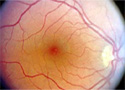
In a recent preliminary study, the researchers have found a new hope for blind persons who are losing their vision by retinitis pigmentosa (RP) and age-related macular degeneration (AMD).
The US scientists in the leadership of Dr Norman Radtke, professor at University of Louisville, Kentucky, have claimed that in the experimental study, they have transplanted the retinal cells with their attached retinal pigment epithelium (RPE) extracted from aborted fetus over the 10 patients: six had lost their vision from Retinitis Pigmentosa (RP) while remaining four became blind from age-related macular degeneration (AMD).
After some time, researchers have observed that seven out of 10 patients have got some vision improvement while three patients had not shown any changes. In seven subjects, four were those who had lost their vision due to ‘dry’ form of AMD while three were suffering from RP.
“This clinical evidence shows the promise of our method to alter progressive vision loss due to incurable degenerative diseases of the retina,” said Dr. Radtke by adding that retinal implants that combine retina and retinal pigment epithelium, which is the pigmented cell layer just outside the neurosensory retina that nourishes retinal visual cells, has demonstrated an apparent ability to integrate with host retinas and to re-establish the visual pathways interrupted by disease.
However, he also said that this was the first stage of experiment and more experiments were needed to get the proper result. “What we have learned will help us to refine this method and obtain further evidence that retinal implants may be a viable therapy for retinal degenerative disease,” said Dr. Radtke.
Both RP and AMD are untreated eye diseases so far and no treatments are available for both kind of disease, which cause the vision loss. Both the diseases destruct the light receiving (Photoreceptor) cells, the liable sensory cells for making vision.
This study has paved the way to make possible to restore the photoreceptor cells by retinal transplantation if it become successful in further experimental proceedings.
According to scientists, the assumption behind these experiments was: ‘the newly fetus may replace the old dead sensory cells’.
The biggest thing behind this successful surgery, as per researchers claimed that no immune rejection has been found in any of the patient despite the lack of a perfect immunological match between the transplant donors and recipients, who had been undergone that retinal transplant surgery. This likely reflected the special "immunologic protection" of tissues within the eye.
But on the other hand, still some big problems exist, which can obstruct the way of this experience, as for any new retinal transplantation, it needs a fetus. “How Many fetus whether aborted can be found for operation?” It is very difficult and unethical too. No religion will allow it.
The research is reported to be published in the August issue of American Journal of Ophthalmology.
|
|





Comments:

Zulfiqar Shah
January 17, 2013 at 2:43 PM
samreen
October 7, 2008 at 12:00 AMhello,, i am from pakistan ,i have a question please look into it.
my father who is of 61 years is suffering from night blindness is now losing his peripheral vision also, we are tense about eye sight.
my question to you is that can any surgery or laser treatment cure it?? and how much are the chances of therapy to be succesful??
please solve our problem and do contact me on my e-mail whatsoever may be the reply







My younger brother who is a eye ailment patient since birth and now he has lost his total vision due to retina detachment despite surgeries no vision restored. I want to know that the treatment is possible. He is 42 years with good physique he has no other disease.