
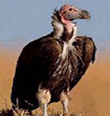
A research published in Bombay Natural History Society Journal stated that Asian Vulture will become extinct within a decade. The survey was conducted across India, Pakistan and Nepal.
The study projected the rapid decline in bird species all these years in which the vulture species with white backed, has shrunken from about 30 million birds to 11, 000 from early 90s. While the slender-billed and long-billed vultures are both have come to an alarming low number, by 97 per cent with in the same period.
Dr Vibhu Prakash who authored the research said that the vulture could be “functionally extinct in less than a decade.”
Elucidating, Andrew Cunningham, co-author of the research from Zoological Society of London said, “Year on year, these two species are declining by about 16%.”
“This is pretty horrific but when you think that the white-backed vulture is declining by about 45-50% each year, that is truly staggering,” he added.
The research reports that the decline of vulture will leave an ecological fissure as these birds are an important link of food chain as it is a natural scavenger feeding on dead body and making our ecosystem clean.
Since long the alarming rate at which these birds are disappearing has put the conservationist into pressure to find new way to save vultures.
One of the main causes of its decline is the killer drug diclofenac which is an anti-inflammatory drug and generally found in carcasses of animal. Reportedly, the drug causes renal failure in vultures feeding on the dead animal.
Taking initiative to slow down the process of extinction, the Indian government banned use of diclofenac in cattle two years back but still it is used illegally for its cheaper price.
Decline of these natural scavengers has left scavenging for disease carrying rats and stray dogs whose population has increased dramatically. Also, the not so effective scavengers have added problem to the environment and has enhanced possibility of contamination of water source.
The researchers took this tedious job and counted the vultures in northern and central India between March and June last year. They surveyed the birds from vehicles along more than 160 sections of road covering a distance of 18,900 kilometers.
The Bombay Natural History Society has been campaigning against the use of diclofenac, and has also pressed for captive breeding programme for vulture.
|
|








Comments: