
A recent study published in Journal of the American Society of Nephrology has robbed of million’s pain who suffer from kidney stone. The researchers in Boston University’s Slone Epidemiology Center have found that a type of bacteria can reduce the risk of persistent kidney stones by about 70%.
The bacteria known as Oxalobacter formigenes can break down oxalate in the intestinal tract, as most of the kidney stones are composed of calcium oxalate (CaC2O4), thus reducing the persistent pain due to kidney stone in a person by breaking it down. The bacteria are found in large number in human population.
During the research, the data was collected from 247 adult patients with regular calcium oxalate stones were compared with 259 age, sex and region –matched controls.
The colonisation of bacteria was studied by culture of stool samples along with this; information was gathered on dietary habits through questionnaire and interview.
Also oxalate excretion and other urinary risk factors for 24 hours were measured in a subset of 139 cases and 138 controls.
It was later assessed that the bacteria was present in 17% among the person with kidney stones while 38% of it was found among controls.
Professor David Kaufman, the lead researcher of the team said, “We observed a strong inverse association between colonisation with Oxalobacter formigenes and recurrent CaC2O4 kidney stones, with a 70 per cent reduction in overall risk.”
“Our findings are of potential clinical importance. The possibility of using the bacterium as a probiotic is currently in the early stages of investigation,” he added.
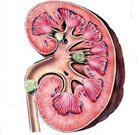
Kidney stones may be of different types but predominantly the stones found are composed of Calcium oxalate. The normal breakdown of food produces waste in the body, the waste through blood reaches kidney for its removal in the urine, which if not removed can form stones. Generally small stones can pass through urine but larger stone may get stuck in a ureter, the bladder, or the urethra causing great pain.
Thus treating patients with bacteria may be an effective way of reducing their risk of repeatedly developing painful kidney stones. Earlier researches too have found that the bacteria colonising the large intestine in human which if absent, cannot degrade calcium oxalate in the intestinal tract and stones can recur.
null
|
|








Comments: