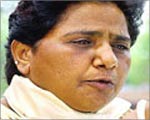
The Uttar Pradesh Chief Minister Mayawati on Wednesday (March 05) lifted the ban on students’ union elections that was imposed last year. With this elections in colleges and universities will take place in the upcoming academic session.
Though the ban has been lifted but the chief minister now has given more stress on the recommendations of the J.M. Lyngdoh Committee on students’ union election. But some unions are of the opinion that restriction on the expenditure of poll campaign and the age of the candidate contesting elections is not appropriate.
However, while announcing the latest development Mayawati said that the academic atmosphere had improved since then the ban was imposed on September 2007. She also said that it was the venomous academic atmosphere with growing unlawful activities in the campus which forced the administration to impose ban.
Though some student groups welcome the move but some point out this as just a gimmick with fear that the administration may reimpose the ban in between as the upcoming campus election is another four or five months away.
Opposition Samajwadi Party who was constantly pressing for lifting the ban has now the other tone accusing the government’s change of mind only to avoid statewide agitation against the ban since its opposition.
Samajwadi Chatra Sabha, the party’s youth wing too questioning the earnestness of administration has asked the government to first remove the fake cases lodged against several student leaders.
Lyngdoh Committee
J.M. Lyngdoh Committee, set up by the Ministry of Human Resource and Development (MHRD) in 2005 to monitor campus violence in terms of ragging and diversity of student union elections and the report submitted on May 2006 was widely accepted by the academic community.
Citing the increasing criminalisation of campus politics the committee expressed its views on the eligibility criteria of the candidates contesting elections including age limit, standard of educational performance and the expenditure involved advocating a more transparency.
Taking note of the committee recommendations, the chief minister said that only students with no criminal background and a good academic performance would be allowed to contest. She also stressed on a shorter election process that is to be completed within 10 days with a maximum expenditure of Rs. 5,000 per each candidate.
According to the Lyngdoh report candidates should have at least 75 percent attendance in classes. The age limits are fixed as 21, 25 and 28 years for candidates for undergraduate, postgraduate and research students respectively. No use of printed posters, banner and flags will be allowed in and around the campus.
Though the Lyngdoh account is no doubt a healthy initiative in developing and ensuring democratic rights of student’s union but it would always be a question as how far our student politics can be kept out from the power, money, muscle and vested interest of the active national politics.
|
|



Comments: